Contents
Quick answer: Sometimes, and usually only in part. Some dental plans pay toward implants as a major service, often around 50%, but annual maximums, waiting periods and missing tooth clauses limit what you actually get. Other plans exclude implants entirely, and traditional Medicare does not cover routine dental care. Your plan's fine print decides.
Picture this. A back tooth cracks below the gumline and can't be saved.
You call your insurance company before deciding anything. The representative checks and says the words you hoped to hear: "Implants are covered."
A few weeks later, the estimate arrives. Your plan pays a fraction of the cost, and the rest is yours.
Nobody lied to you. "Covered" just meant something different from what you expected.
The simple answer is… some dental insurance plans help pay for implants, and some don't.
The more honest answer is… whether implants are "covered" matters less than four details most people never see: the annual maximum, the waiting period, the missing tooth clause and how the plan splits each step of treatment.
This guide explains each one in plain language, so your first estimate isn't a surprise.
Does Dental Insurance Cover Dental Implants?
It depends entirely on the plan. Some plans list implants as covered. Others exclude them outright. One university plan we reviewed pays toward implant surgery, up to $1,500 a year, but excludes the crowns, bridges and dentures that attach to implants (Pacific Lutheran University, 2022).
When plans do pay, implants and crowns usually fall under major services. One employer plan, for example, covers major care such as crowns and dentures at 50% (Weill Cornell Medicine, 2019).
For patients in Las Cruces, El Paso and across southern New Mexico, our front office checks your benefits before treatment starts, so you know what your plan will likely pay. You can read how that works on our insurance and payment page.

The Biggest Difference: "Covered" Isn't the Same as "Paid For"
Most dental plans have an annual maximum. That's the most the plan will pay for all your dental care in one year.
Maximums vary a lot. Among university plans we reviewed, annual maximums ran from $1,000 (Weill Cornell Medicine, 2019) to $1,500 (St. John Fisher University, 2025) to $3,000 a year (Missouri State University, 2025).
Here's what that means in practice, using real numbers from this post as an example only:
- Our single implant special starts at $4,999.
- A plan that pays 50% of major work would owe about $2,500 on that amount.
- If that plan has a $1,000 annual maximum, it stops paying at $1,000, and less if you already used benefits for cleanings or fillings that year.
The percentage gets your attention. The maximum decides your bill.
Your real numbers depend on your plan, your deductible and what your treatment actually includes.
How Do the Main Coverage Options Compare?
Here's a quick look at the ways patients usually pay for implants.
| Option | Pays toward implants? | What to watch |
|---|---|---|
| Dental PPO insurance | Sometimes, often in part | Annual maximum, deductible, waiting periods, missing tooth clause. Some plans exclude implants entirely. |
| Traditional Medicare | No | Medicare excludes routine dental care, including implants. |
| Medicare Advantage | Varies by plan | Many plans include some dental benefit, but few are comprehensive. Check the annual limit and whether implants are listed. |
| Medical insurance | Rarely | Occasionally considered when tooth loss is tied to an accident or medical condition. Case by case. |
| Our in-house dental plan | Not insurance | Preventive care plus member savings on many treatments, with no yearly maximum. Ask how savings apply to implants. |
| Financing (Cherry, CareCredit) | Not coverage | Spreads the cost into monthly payments. Can be combined with insurance. |
Most patients end up combining two or more of these.
What Parts of an Implant Might Insurance Pay For?
An implant isn't one procedure. It can include a 3D scan, an extraction, bone grafting, the implant post, a connector called an abutment and the final crown.
Plans don't always treat each step the same way. Some pay toward the implant surgery but not the crown on top. One university plan, for example, covers implant surgery but excludes implant-supported crowns, bridges and dentures (Pacific Lutheran University, 2022). Our own implant page notes the reverse can happen too, with some policies covering only part of the procedure, such as the crown.
When you get an estimate, ask for it line by line. It's the clearest way to see what your plan does and doesn't pay.

Does Medicare Cover Dental Implants?
Traditional Medicare does not. Researchers writing in Health Affairs note that Medicare explicitly excludes dental care from covered benefits, and that only about 12% of beneficiaries in their data had any dental coverage (Willink et al., 2016).
Medicare Advantage plans are different, but uneven. A 2025 study found that about 94% of Medicare Advantage enrollees were in a plan with some dental benefit, yet only about 4% were in a plan that met all the researchers' criteria for comprehensive coverage (Simon et al., 2025).
If you have Medicare Advantage, look for three things in your plan documents: the yearly dental limit, the coinsurance for major services and whether implants are listed at all.
What Is a Missing Tooth Clause?
A missing tooth clause limits coverage for replacing a tooth that was already missing before your plan started.
Plans handle this differently. One university plan covers those teeth at 50% only during the first 24 months of coverage (Missouri State University, 2025). Another won't pay for a replacement of a tooth lost before you were insured, unless the same device also replaces teeth lost later (Weill Cornell Medicine, 2019).
If you're changing jobs or plans, the timing of an extraction can affect what gets covered.
Are There Waiting Periods for Implant Coverage?
Some plans make you wait months after enrolling before they pay for major work. Others don't. The only way to know is to check your plan's summary of benefits or ask us to verify it.
If you just enrolled in a new plan, check the waiting period before you schedule. Starting early could mean paying more out of pocket.
What Should I Ask My Insurance Company About Implants?
If you call your plan yourself, these questions get you much further than "Are implants covered?":
- Are dental implants a covered benefit, and under which category?
- What percentage do you pay for the implant, the abutment and the crown, separately?
- Is bone grafting or a 3D scan covered when it's done for an implant?
- What is my annual maximum, and how much of it is left this year?
- What is my deductible, and have I met it?
- Is there a waiting period for major services, and when does mine end?
- Does my plan have a missing tooth clause?
- Will you pay for an implant, or only the amount you'd pay for a bridge or denture?
Write down the date, the representative's name and a reference number for the call. Or simply let our team make the call for you.
Should I Get a Pre-Treatment Estimate First?
Yes. Many plans ask for one on larger work. One university plan, for example, recommends a pre-determination for any dental service costing $200 or more (Missouri State University, 2025).
A pre-treatment estimate shows what the plan expects to pay. It's generally an estimate, not a guarantee, because your remaining benefits and eligibility can change before the claim is processed.
What We Look at Before Recommending an Implant
Insurance matters, but it shouldn't make the clinical decision. Before we recommend an implant, we look at:
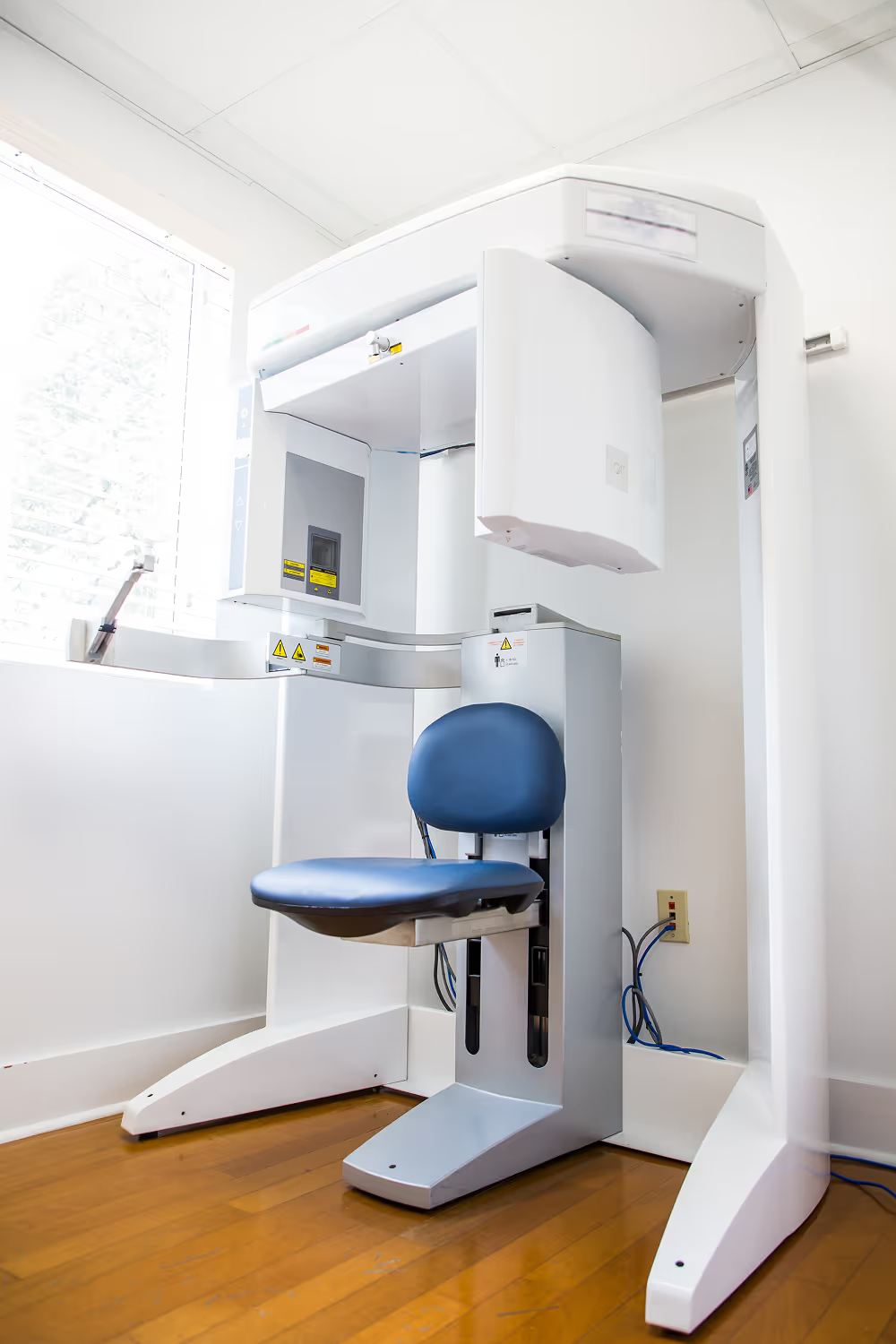
- Your bone. A 3D CBCT scan shows whether there's enough bone or whether grafting is needed first.
- Your gums and nearby teeth. Gum disease or failing neighbors can change the plan.
- Your timeline. Treatment often spans several months, which can sometimes be staged across two benefit years.
- Your plan's rules. Maximums, waiting periods and missing tooth clauses can affect when we schedule each step.
- Your alternatives. A bridge, a partial denture or implant-supported dentures may suit some cases better.
Then we give you a written estimate and talk through it before anything starts.
Is an Implant Still Worth It if Insurance Would Pay More for a Bridge?
Often, yes, but it depends on your mouth. A systematic review on the economics of single implants versus short bridges found similar upfront costs and similar failure rates. The authors noted that not having to drill down healthy neighboring teeth can make the implant the better value for the patient (Scheuber et al., 2012).
Implants also hold up well over time. A meta-analysis of 10-year studies found about 96% implant survival, or about 93% when the authors accounted for patients lost to follow-up (Howe et al., 2019).
For a deeper look at why replacing a tooth matters, see the benefits of replacing missing teeth with implants.
What Are the Risks and Limits?
A few things can catch patients off guard:
- Estimates aren't promises. Final payment depends on your benefits when the claim is processed.
- Maximums reset. Unused benefits usually don't carry over, though some plans offer rollover.
- Not every step may be covered. Grafting, scans or the implant post itself may be paid differently from the crown.
- Implants can fail. It's uncommon, but in the 10-year review, survival was lower for patients 65 and older (Howe et al., 2019).
- Crowns wear out. The implant can last for decades, but the crown on top may need replacing in 10 to 15 years.
Cost is a real barrier. Research shows Americans report more financial barriers to dental care than to any other type of health care (Vujicic et al., 2016). That's why we plan with your budget in mind.
How Much Do Dental Implants Cost Without Insurance?
Our dental implants page lists a single implant at about $3,000 to $6,000, and full-mouth solutions at about $15,000 to $50,000 or more, depending on the case.
Our single implant special starts at $4,999. Extractions, bone grafting, the type of crown and sedation can change the final cost, so your consultation estimate is the number to trust.
If you don't have insurance, a few options can help:
- Our in-house dental plan. Adult membership is $400 a year and includes preventive care plus member savings, with no yearly maximum, no deductible and no waiting period.
- Financing. Cherry and CareCredit let you spread the cost into monthly payments.
- A free implant consultation. You get a clear plan and price before you decide.
Our implant crowns are made in our own lab, which is one reason we can show you a detailed plan up front. Read more in why choose a dentist with an in-house lab, and if you wear a loose lower denture, see the problem with lower dentures.
Final Takeaways
- Some dental plans pay toward implants, usually as a major service and often around 50%. Others exclude them.
- The annual maximum often limits your benefit more than the coverage percentage does.
- Missing tooth clauses and waiting periods can delay or reduce coverage.
- Traditional Medicare doesn't cover routine dental care. Medicare Advantage dental benefits vary widely.
- Ask for a line-by-line, pre-treatment estimate before you start.
- Insurance, our in-house plan and financing can be combined.
Not sure what your plan will pay toward an implant? Book a free implant consultation at Organ Mountain Dental on South Telshor Boulevard in Las Cruces. Call (575) 522-1314 or request an appointment online. We'll check your benefits, show you your scan and give you a clear estimate before you decide.
Research References
- Willink A, Schoen C, Davis K. Dental care and Medicare beneficiaries: access gaps, cost burdens, and policy options. Health Affairs. 2016;35(12):2241-2248. https://doi.org/10.1377/hlthaff.2016.0829
- Simon L, Vujicic M, Nasseh K. Availability of dental benefits within Medicare Advantage plans by enrollment and county. JAMA. 2025;333(6):534-535. https://doi.org/10.1001/jama.2024.24814
- Vujicic M, Buchmueller T, Klein R. Dental care presents the highest level of financial barriers, compared to other types of health care services. Health Affairs. 2016;35(12):2176-2182. https://doi.org/10.1377/hlthaff.2016.0800
- Missouri State University Human Resources. 2025 Dental Plan Year FAQs. Springfield, MO: Missouri State University; 2025. https://missouristate.edu/Human/_Files/2025_FAQ_Dental.pdf
- Pacific Lutheran University Human Resources. Willamette Dental summary of benefits, plan WA137. Tacoma, WA: Pacific Lutheran University; 2022. https://www.plu.edu/human-resources/wp-content/uploads/sites/141/2021/10/plu-bs-2022-combined.pdf
- St. John Fisher University Human Resources. 2025 dental plan comparison. Rochester, NY: St. John Fisher University; 2025. https://www.sjf.edu/media/services/human-resources/benefits-and-compensation/retirement/Dental-Plan-Comparison.pdf
- Weill Cornell Medical College of Cornell University. Dental summary of benefits. New York, NY: Weill Cornell Medicine; 2019. https://studentservices.weill.cornell.edu/sites/default/files/dental_summary_of_benefits_20190923.pdf
- Scheuber S, Hicklin S, Brägger U. Implants versus short-span fixed bridges: survival, complications, patients' benefits. A systematic review on economic aspects. Clinical Oral Implants Research. 2012;23(Suppl 6):50-62. https://doi.org/10.1111/j.1600-0501.2012.02543.x
- Howe MS, Keys W, Richards D. Long-term (10-year) dental implant survival: a systematic review and sensitivity meta-analysis. Journal of Dentistry. 2019;84:9-21. https://doi.org/10.1016/j.jdent.2019.03.008